By Tonya Wiley and Sonja Fordham for Sawfish Conservation Society
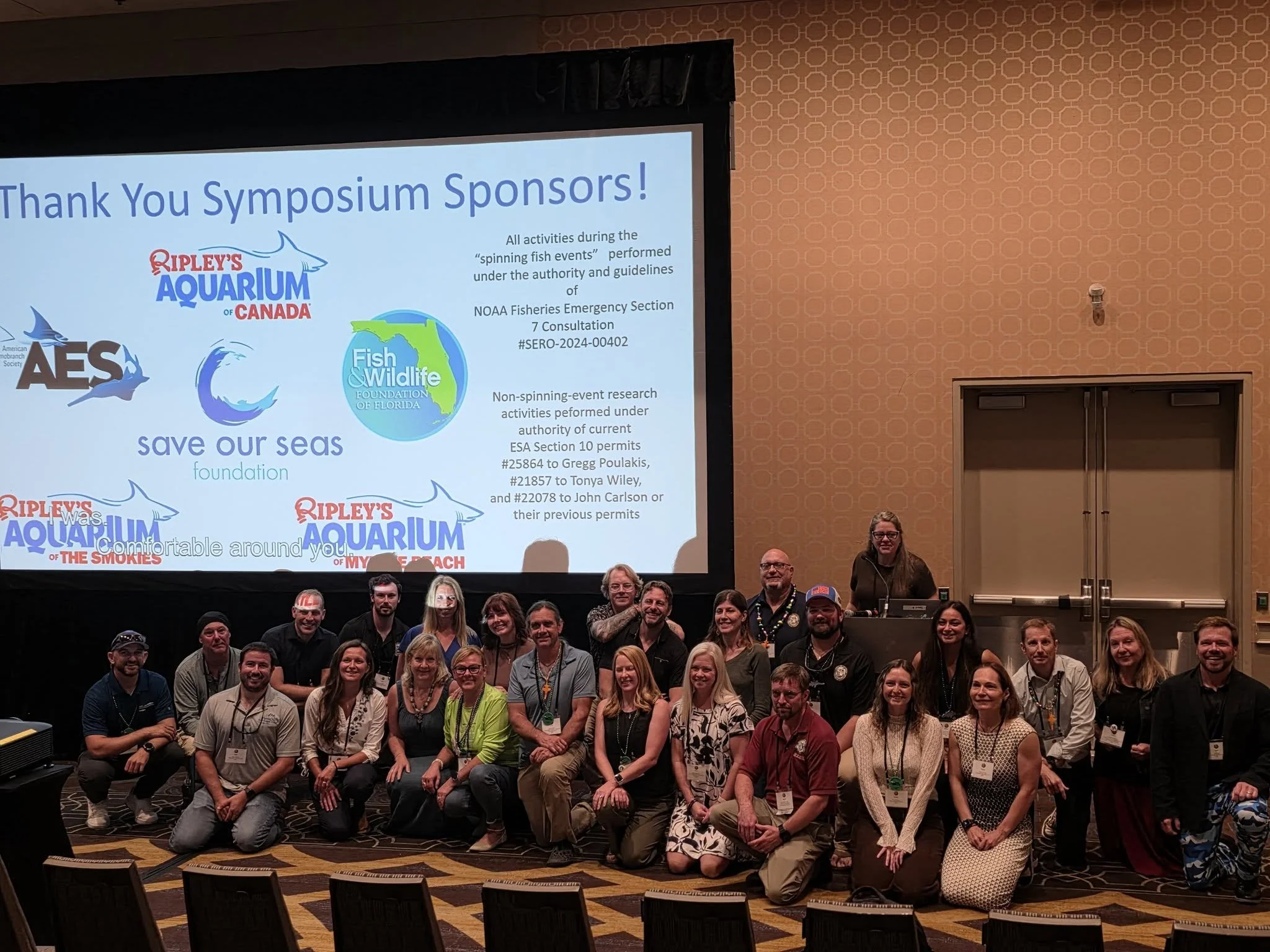
An extraordinary group of experts gathered recently in New Orleans to explore the latest threats facing one of America’s most threatened species, the smalltooth sawfish (Pristis pectinata). The special symposium —“Learning from Unusual Sawfish Mortality Events: Causes, Effects, and Conservation Applications” — was part of the American Elasmobranch Society annual meeting and featured top researchers in the fields of ecology, toxicology, and veterinary science as well as government officials, conservationists, and aquarists. The goal was to share information on the unprecedented sawfish mortality from the “spinning fish” events of 2024/2025, reassess the overall threat of extinction, and plan more effective responses.
Background
Since the U.S. smalltooth sawfish (Pristis pectinata) was listed under the Endangered Species Act in 2003, experts from research institutions, conservation organizations, government agencies, aquariums, and angling communities — supported by philanthropists and thousands of concerned citizens — have cooperated in efforts to save the species from extinction. Protections were established, research expanded, public awareness grew, and eventually it appeared that the population was at least stable and possibly increasing.
Then, in early 2024, smalltooth sawfish in the Florida Keys began exhibiting unusual neurological symptoms such as disoriented swimming, shallow water thrashing, and beaching from the now widely recognized "spinning fish" sickness. By 2025, researchers had investigated hundreds of reports of affected sawfish, and collected more than 50 dead sawfish for necropsy, amounting to the largest collaborative research effort ever taken for this critically endangered species.
Putting Puzzle Pieces Together
Researchers presented evidence suggesting that toxins from naturally occurring benthic algae caused the unusual neurological symptoms observed in sawfish and many other marine fishes. It is still unknown what caused the benthic algae to bloom at above normal densities. Scientists were able to rule out several other previously considered causes of the spinning events (including red tide, infectious disease, parasites, low dissolved oxygen, abnormal salinity, temperature extremes, and several common pollutants).
Although many important scientific questions remain, presenters demonstrated remarkable advances in the wide range of relevant research fields. The community has moved from simply documenting these unusual events to developing a much deeper understanding of possible causes and consequences.
Hard truths
Cumulatively the symposium underscored a sobering reality—the smalltooth sawfish population is now in serious peril. The latest genomic research suggests that the U.S. population is smaller than previously believed and includes a dangerously low number of breeders. To make matters worse, most sawfish lost from the spinning fish events were mature adults or soon-to-be-mature large juveniles, further reducing the already hindered reproductive potential of the population. It appears that most if not all sawfish exhibiting symptoms end up dying as a result, which ups the death toll estimate well above the 65 documented mortalities to nearly 300 individuals. Every remaining reproductively mature sawfish is therefore now absolutely vital to the future of the species.
Given these harsh realities, several presenters stressed the increased urgency of following through on core, unfulfilled sawfish recovery imperatives: monitoring and mitigating sawfish bycatch in southeast US shrimp fisheries (especially the pink shrimp fishery operating off southwest Florida) and protecting critical mangrove habitat from development and degradation.
From Response to Preparedness
After scientific findings on virtually every aspect of the spinning sickness crisis were presented, the focus of discussions shifted from "What happened?" to "How can we be better prepared next time?".
Participants emphasized the importance of:
Developing standardized emergency response protocols;
Expanding baseline health monitoring for healthy sawfish;
Strengthening partnerships among agencies, researchers, aquariums, and conservation organizations;
Continuing multidisciplinary research into harmful algal toxins and other emerging threats;
Minimizing fisheries mortality while scientific investigations continue; and
Improving communication and preparedness before any future unusual mortality events occur.
Looking Ahead
The symposium closed with a sense of urgent need for immediate action over a broader spectrum. The unusual mortality events were unprecedented, but so too was the scientific response. Researchers from many disciplines worked together at an extraordinary pace, building partnerships that will strengthen future investigations and improve preparedness for whatever challenges lie ahead.
More than twenty years ago, the Endangered Species Act listing supercharged sawfish science. The latest research tells us that the next chapter will require a significantly broader view of threats and an even greater commitment to conservation policies. We cannot undo the sawfish lost during these unprecedented events, but we can learn from them and work harder to protect what remains. Sustained, science-based action is the key to ensuring that future generations know sawfish not as a species we lost, but as one we chose to save.
What Can You Do?
Everyone has a role to play in sawfish recovery. Here are some ways you can help:
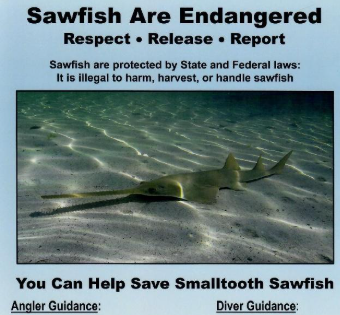
Follow safe handling and release guidelines if you catch a sawfish and safe viewing guidelines if you see one while diving, kayaking, or boating.
Become an additional voice for sawfish conservation.
Report sightings by calling 844-4-SAWFISH, emailing sawfish@myfwc.com, or submitting the form at www.SawfishRecovery.org.
Encourage your state and federal elected officials to support funding for sawfish research and protection, as well as mitigation of bycatch and harmful algal blooms.
Urge the Department of Commerce to reduce allowable sawfish take, establish meaningful levels of monitoring for Gulf shrimp fisheries, and prohibit shrimping in areas where mature female sawfish congregate.
Support non-profit organizations like the Sawfish Conservation Society, Havenworth Coastal Conservation, and Shark Advocates International.